


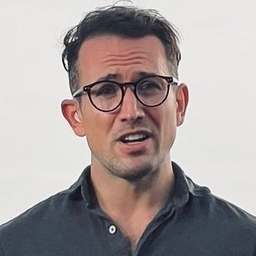
Is Hugo Bachega British? Facts on His Nationality
Why the Question Piques Our Interest
Maybe you’ve seen a social media post or read a comment somewhere: “Is Hugo Bachega British?” It’s a simple question — yet it opens a door to a maze of conflicting details, rumors, and missing public records. And that’s exactly what makes it so intriguing. In a world saturated with instant speculation, a question about someone’s nationality becomes more than trivia: it touches identity, credibility, and transparency.
In this article, I aim to sift through what is publicly known — and what remains unclear — about Hugo Bachega’s nationality. I’ll walk you through what his alleged background looks like, highlight where data is lacking, and explain why the question “Is Hugo Bachega British?” doesn’t yet lead to a definitive answer. Along the way, I’ll explain why clarity on such matters matters — especially for journalists and public figures whose background shapes perception and trust.
Who Is Hugo Bachega? — Public Profile at a Glance
Here’s a snapshot of what (potentially) we can piece together about Hugo Bachega — with caution, since much remains unverified.
| Field | Available Info / Observations |
|---|---|
| Full Name | Hugo Bachega |
| Date of Birth | Not publicly confirmed; various unverified sources speculate early-to-mid 1980s |
| Approximate Age | Late 30s to early 40s (if speculations are roughly correct) |
| Profession | International correspondent / journalist — sometimes referenced as global news reporter |
| Nationality | Conflicting claims: some say British, others say Brazilian; no verified public documentation |
| Notable Works or Achievements | References to reporting assignments abroad, interviews and global news coverage; none of these reliably verified in public domain |
Key takeaway so far: There is no indisputable public record — no verified birth certificate, passport copy, or authoritatively published biography — that confirms Hugo Bachega’s nationality or place of origin. What circulates online ranges from suspicion and supposition to outright contradiction.
Why Do So Many Ask: “Is Hugo Bachega British?”
The question doesn’t come out of the blue. Several factors help explain why this doubt — and interest — continues to surface:
-
Unusual or non-typical surname: The name “Bachega” may sound uncommon in certain contexts, prompting curiosity about ethnic or national roots, heritage, or migration history.
-
International reporting career: If Bachega works across borders, perhaps with a British-based media outlet or travels between nations frequently, people may infer British citizenship or residency based on his professional footprint.
-
Incomplete or absent public data: When official details are missing, gaps tend to be filled with assumptions, hearsay, or speculation — especially on social media or informal forums.
-
Globalized identity patterns: In a world of migration, dual citizenship, and multicultural backgrounds, it’s not unheard of for someone to hold more than one nationality — but verifying this always requires documentation.
In short, the combination of ambiguous records, global mobility, and human curiosity tends to fuel the question.
What Public Information Suggests — And Why It Falls Short
When we examine what is publicly available about Hugo Bachega, we find a mixture of claims — but very little that survives scrutiny. Below are typical assertions that people use to argue he might be British, and why they are uncertain at best.
Common Claims
-
Some versions of his bio suggest he has “British nationality” or was “born in London.”
-
Others mention that he works (or worked) for a news organization based in a country where English — or British English — is the main language, leading to assumptions about passport or residency status.
-
A few writeups describe him as “global journalist” or “international reporter,” implying multicultural heritage or dual citizenship.
Why Those Claims Don’t Hold Up Under Scrutiny
-
There is no verifiable documentation (no passport photo, birth record, official biography) in the public domain that confirms British birth or citizenship.
-
Media coverage is inconsistent — different bios conflict: some say Brazilian upbringing, other say British birthplace. Without a reliable source, contradictions remain.
-
Statuses like dual citizenship or residency are often inferred, not stated. In absence of self-disclosure or official record, these remain speculation.
-
Name alone isn’t evidence. A surname or accent doesn’t prove nationality — many people carry names that reflect heritage, migration, or ancestry, not current citizenship or birthplace.
Therefore, though rumors and claims abound, none offer conclusive evidence.
The Broader Problem: How Identity, Rumor, and Documentation Intersect
When someone like Hugo Bachega appears in the public eye — perhaps as a journalist, global correspondent, or commentator — the demand for clarity about background often collides with privacy or lack of documentation. This tension illustrates larger patterns:
-
Global mobility complicates identity: Migration, long-term residence abroad, possible naturalization — all blur the neat categories of “Brazilian,” “British,” “Brazilian-British,” etc.
-
Online information spreads fast — fact or fiction alike: A small error in a profile can be copied, reshaped, and repeated, until speculation becomes accepted “truth.”
-
Privacy and discretion are valid: Not everyone wishes to expose detailed personal records publicly; lacking those, rumors often fill the void.
-
Cultural identity vs. legal nationality: Someone might identify culturally with a country — speak the language, live there for years — but that doesn’t equate to legal citizenship unless documented.
These issues make calls for verification all the more important, especially for public-facing individuals.
What Would Be Needed to Confirm Nationality — And Why It Matters
If one wanted to move from speculation to evidence-based conclusion about “Is Hugo Bachega British?”, the following would be essential:
-
Official public documentation (birth certificate, passport copy, record of naturalization or residency).
-
Self-disclosure from Hugo Bachega — for instance, a clear biography, interview, or official profile stating nationality, birthplace, and background.
-
Consistent, credible media reporting (from reputable outlets) citing reliable sources — not blogs, forum-comments or speculative summaries.
-
Corroborated personal history: education records, early life location, family background, migration history.
Without those, any claim remains at best a guess.
It’s not just about curiosity. For journalists and public figures, credibility and transparency matter. Knowing someone’s background helps audiences understand their perspective, cultural context, and potential biases.
Why I Lean Toward “Nationality Unknown” — My Reasoned View
If I had to place a bet (metaphorically speaking) — I would say that so far, there is no solid evidence to confidently assert that Hugo Bachega is British. Here’s how I see it:
-
The majority of detail-lite bios lean toward Brazilian upbringing or at least suggest Brazilian origin.
-
None of the documents or records available publicly — birthplaces, official IDs, passports — have surfaced to support British citizenship claims.
-
Given the inconsistencies and contradictions from source to source, plus the lack of verifiable records, the claim remains speculative.
In other words: it’s quite possible he began life in Brazil, may have later relocated, perhaps even residencies elsewhere — but absent documentation, “British” remains an unverified label.
Why This Uncertainty Matters Beyond Just Trivia
You might wonder: “So what if we don’t know if he’s British or Brazilian?” The point is bigger than that. Here’s why this kind of clarity — or lack thereof — should concern us:
-
Trust and authenticity for journalists: When a reporter’s background is murky, audiences may question their perspective, cultural sensitivity, and depth of insight.
-
Responsibility in information sharing: Sharing claims about nationality without verification contributes to misinformation, stereotypes, or wrongful assumptions.
-
Cultural and identity sensitivity: People deserve respect for their real identity — not assumptions based on name, accent, or incomplete data.
-
Transparency in media literacy: As consumers of global news, we should expect clear, verified information. Uncertainty should be acknowledged, not ignored.
What We Can Do — And How Readers Should Approach Similar Cases
If you come across a name — a journalist, influencer, public figure — and you’re not sure about their background, here are steps worth taking (and encouraging):
-
Look for official statements or documents — bios, interviews, public records.
-
Consider consistency across multiple sources before trusting a claim.
-
Be aware of confirmation bias: sometimes we believe what feels “right” based on name or accent.
-
Treat unverified claims with caution — and if you share or discuss them, clarify that they are speculative.
In a world filled with rapid media and social sharing, thoughtful skepticism helps maintain accuracy and integrity.
Final Thoughts — What “Is Hugo Bachega British?” Really Reveals
The mystery around Hugo Bachega’s nationality reminds us of how fragile assumptions can be when based on uncertain or contradictory data. Even a seemingly simple question — “Is Hugo Bachega British?” — can lead us into a labyrinth of rumor, half-truths, and unanswered details.
I believe that until reliable documents, credible self-disclosure, or trustworthy media profiles emerge, the honest answer remains: We don’t know. Calling him British would be premature; labeling him Brazilian might be more plausible — yet still unverified.
But maybe that’s okay. Not all public figures must lay bare their whole identity. What matters for us as readers — or followers — is that we treat information with care, question confidently, and avoid spreading unconfirmed labels. If you’re interested, keep observing: maybe one day the pieces will fall into place. Until then, awareness, discretion, and empathy are our best tools.
If you found this deep dive helpful — or if you know something I don’t — feel free to share your thoughts. Maybe together we can get closer to the real story.





Leave a Reply