


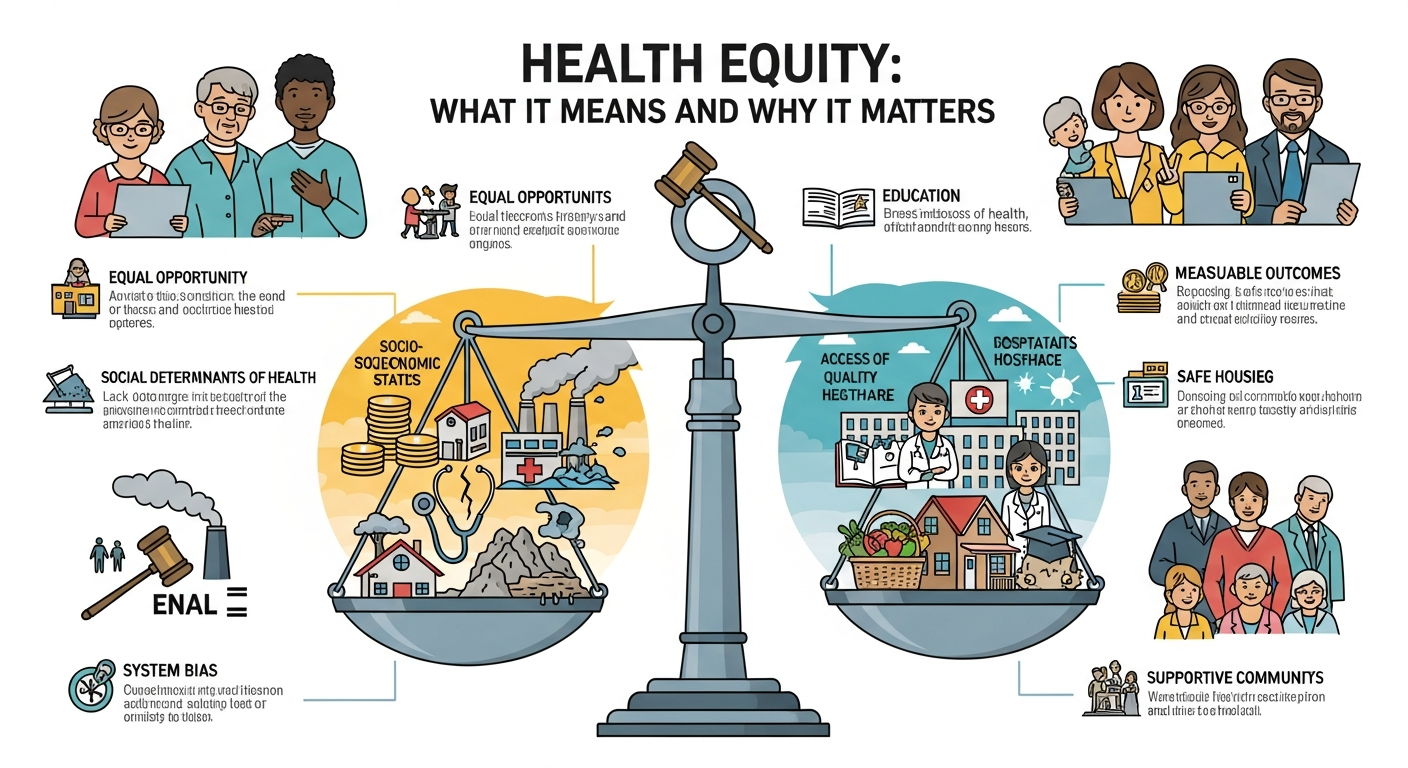
Health equity is about making sure everyone has a fair chance to be healthy. It means that no matter who you are, where you live, or how much money you have, you get the care and support you need to live a healthy life. But sometimes, people face unfair barriers that make it hard to stay healthy. That’s where health equity comes in—to fix these gaps and bring fairness to healthcare.
In this article, we’ll explore health equity deeply. You’ll learn why it’s important, how it works, and what can be done to improve it for everyone. We’ll also answer common questions and give real-life examples so it’s easy to understand.
What is Health Equity?
Health equity means that everyone gets the healthcare and support they need, regardless of race, income, gender, or where they live. It is different from equality, which means giving everyone the same thing. Health equity focuses on fairness by giving extra help to those who need it most. For example, a community with fewer doctors might get more resources to fix the problem.
Why is Health Equity Important?
When health equity is missing, some people get sick more often or don’t live as long. This is called health disparities. These unfair differences can be caused by poverty, racism, or lack of education. Fixing health equity means fewer people get sick, and everyone has a better chance at a happy life.
Health Equity vs. Health Equality: What’s the Difference?
Health equality means treating everyone the same, but that doesn’t always work. Health equity means treating people differently, based on their needs, to make sure everyone reaches the same health level. Think of it like giving people different sizes of shoes so everyone can walk comfortably.
Causes of Health Inequity
Many things cause health inequity, such as:
- Poverty and low income
- Racism and discrimination
- Poor education
- Lack of access to healthcare
- Living in unsafe neighborhoods
Understanding these causes helps us create better solutions.
How Social Determinants Affect Health Equity
Social determinants are the conditions where people live, learn, work, and play. These affect health a lot. For example, clean water, good schools, and safe parks help people stay healthy. When these are missing, health problems increase. So, improving social determinants is key to health equity.
Examples of Health Equity in Action
Many programs work hard to improve health equity. For example, mobile clinics travel to poor neighborhoods to give free check-ups. Another example is offering language support so people who don’t speak English well can still get good care.
How Governments Can Promote Health Equity
Governments can make rules and fund programs to help people get fair health care. This includes building clinics in rural areas or providing health insurance to low-income families. When governments act, communities get stronger and healthier.
Role of Healthcare Providers in Health Equity
Doctors and nurses can help by treating every patient with respect and understanding their unique needs. They can learn about different cultures and barriers patients face. This way, they provide better care and help close the health gap.
The Impact of Health Equity on Communities
When health equity improves, communities become happier and safer. People miss less work or school, and healthcare costs go down. Strong health equity also helps fight diseases faster and keeps everyone healthier.
Challenges to Achieving Health Equity
Reaching full health equity is not easy. It takes time, money, and effort. Some challenges include lack of funding, bias in healthcare, and political disagreements. But with continued focus, progress is possible.
How You Can Help Improve Health Equity
Everyone can help health equity. You can:
- Learn about health equity and share what you know
- Support local health programs
- Volunteer to help those in need
- Vote for leaders who care about fair healthcare
Small actions add up to big changes.
FAQs About Health Equity
- What does health equity mean?
Health equity means fair access to health care and resources for everyone, no matter their background. - How is health equity different from health equality?
Health equality means everyone gets the same thing. Health equity means everyone gets what they need to be healthy. - Why do some people face health inequities?
Because of factors like poverty, racism, education gaps, and lack of access to care. - What are social determinants of health?
These are the living conditions like housing, schools, and neighborhoods that affect health. - Can health equity reduce health disparities?
Yes, by providing fair resources and care, health disparities can shrink. - How can individuals promote health equity?
By educating themselves, volunteering, supporting health programs, and advocating for fair policies.
Conclusion: Why Health Equity Matters to Us All
Health equity is about fairness, kindness, and care. It means everyone, no matter their story, gets a chance to be healthy. When we work together—families, doctors, leaders—we create a world where health is a right, not a privilege. You can be part of this change too. Start by learning more and sharing what you know. Together, we can build healthier, happier communities for all.







Leave a Reply