


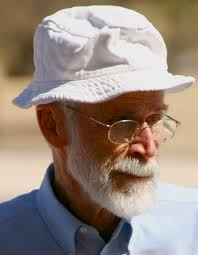
The Man Who Saw Beyond the Horizon
Every once in a while, a thinker comes along whose ideas ripple far beyond their lifetime. Spencer MacCallum was one of those rare individuals — a man whose mind effortlessly bridged anthropology, entrepreneurship, and the philosophy of freedom. While the world was busy following trends, MacCallum was busy questioning them. He didn’t just observe societies; he imagined new ways for people to live, work, and prosper together.
What made Spencer MacCallum so remarkable wasn’t just his intellect — it was his ability to turn ideas into living systems. He saw communities not as static structures but as dynamic organisms, capable of evolving through creativity and collaboration. This legacy continues to inspire thinkers, entrepreneurs, and change-makers across disciplines.
In this exploration of his life and ideas, we’ll unpack Spencer MacCallum’s groundbreaking concepts, his approach to innovation, and the enduring lessons he left behind for a world still struggling to balance individuality and cooperation.
Spencer MacCallum: A Brief Biography
| Full Name | Spencer Heath MacCallum |
|---|---|
| Date of Birth | December 21, 1931 |
| Age | Deceased (Passed away in 2020) |
| Profession | Anthropologist, Entrepreneur, Author |
| Nationality | American |
| Net Worth (approx.) | Estimated around $1 million (at time of death) |
| Notable Works / Achievements | Known for his work on community models, anthropology, and collaboration with Walter Knott and Bob Black; Author of The Art of Community |
The Roots of a Visionary
Born into a lineage of thinkers — his grandfather, Spencer Heath, was a well-known inventor and philosopher — Spencer MacCallum grew up surrounded by ideas that challenged conventional wisdom. He was not content with studying societies from a distance. Instead, he immersed himself in understanding how human cooperation and private enterprise could harmonize without bureaucratic control.
From his early research to his groundbreaking collaborations, MacCallum sought to prove that innovation flourishes when individuals are free to create and exchange voluntarily. His approach wasn’t political; it was deeply human.
The Art of Community: Spencer MacCallum’s Defining Work
If there’s one book that encapsulates the genius of Spencer MacCallum, it’s The Art of Community. In this influential work, he explored how voluntary communities could thrive without coercion — a radical idea for its time.
He proposed that society’s most successful structures emerge organically, much like ecosystems in nature. Rather than relying on governments or centralized systems, MacCallum envisioned communities based on contractual relationships and shared values.
This philosophy would go on to influence intentional communities, free cities, and modern cooperative living models. Today, as people seek alternatives to rigid social systems, Spencer MacCallum’s ideas feel more relevant than ever.
Spencer MacCallum and the Legacy of Innovation
When you study innovators like Elon Musk or Buckminster Fuller, one thing becomes clear: true visionaries challenge the foundations of what society accepts as “normal.” Spencer MacCallum was cut from that same cloth.
He believed innovation begins with the imagination, not technology. His work urged people to look at human relationships, property, and organization differently — not as constraints but as tools for freedom.
Key Innovations and Philosophies:
-
Voluntary Exchange as the Core of Civilization
MacCallum argued that mutual benefit — not regulation — drives human progress. -
The Entrepreneur as a Social Architect
He saw entrepreneurs not merely as businesspeople, but as creators of community frameworks. -
Cultural Anthropology Meets Economics
His unique blend of anthropology and economics offered a human-centered approach to development. -
The Revival of Private Communities
MacCallum explored how privately built and managed communities could outperform government-run ones in efficiency and harmony.
Collaborations and Influences
During his lifetime, Spencer MacCallum collaborated with various thinkers, including Walter Knott, the founder of Knott’s Berry Farm, and Bob Black, an influential social critic. These partnerships helped bridge practical business experience with philosophical insight.
One of his most profound impacts came through his support for Taliesin West, the Frank Lloyd Wright school of architecture. He saw parallels between Wright’s architectural philosophy and his own belief that design could empower rather than restrict human potential.
His anthropological work in Mexico — particularly his study of indigenous pottery markets in Mata Ortiz — showcased how creativity and free exchange could revive entire communities. What began as a local craft movement grew into an international art renaissance, thanks in part to MacCallum’s guidance.
Spencer MacCallum’s Enduring Relevance in Today’s World
In a time dominated by digital transformation, remote work, and decentralized technologies, Spencer MacCallum’s ideas have found new life. His belief in voluntary association and innovation without permission aligns perfectly with the ethos behind blockchain, decentralized finance, and autonomous organizations.
He envisioned a world where individuals could collaborate without coercion, build without restriction, and innovate without fear. Sound familiar? That’s the essence of the modern entrepreneurial movement — from start-ups to DAOs.
Lessons Modern Innovators Can Learn from Spencer MacCallum
-
Innovation Is a Mindset, Not a Product
Tools and technology change, but imagination is eternal. -
Freedom Fuels Creativity
Restrictive systems suppress growth. Freedom unlocks it. -
Communities Are Built, Not Mandated
Genuine communities arise from shared values, not imposed rules. -
Value Creation Is Mutual
Every exchange should uplift both sides — that’s sustainable progress. -
Culture Is the Ultimate Technology
Understanding human behavior is more powerful than any algorithm.
Beyond Anthropology: The Human Side of Spencer MacCallum
Despite his intellectual rigor, Spencer MacCallum wasn’t a detached scholar. He had an infectious curiosity and a genuine belief in human goodness. Those who knew him describe a man who listened more than he spoke, who sought connection over debate.
He lived by the principles he taught — simplicity, independence, and respect for others’ autonomy. To him, life was an ongoing experiment in cooperation.
His humility was perhaps his most underrated trait. While many sought recognition, he pursued truth — even when it meant challenging mainstream institutions.
Spencer MacCallum’s Legacy in Education and Thought
Today, universities and think tanks continue to discuss Spencer MacCallum’s ideas, especially within the realms of social economics, libertarian studies, and community design. His writings inspire students to explore how societies can thrive without dependency on centralized systems.
Moreover, his practical contributions to real-world projects — from reviving local economies to advising on community governance — prove that his ideas weren’t just theoretical. They were actionable blueprints for a freer, more innovative world.
Quotes that Capture the Spirit of Spencer MacCallum
“Innovation is not born from systems — it’s born from freedom.”
“A true community is a living art form, crafted by the people within it.”
“The greatest innovation is the willingness to question what everyone else accepts.”
These statements embody the timeless wisdom that keeps Spencer MacCallum relevant to entrepreneurs, anthropologists, and thinkers even today.
Why Spencer MacCallum Still Matters
In an age where technology connects us yet divides us, Spencer MacCallum reminds us that real progress begins with trust and voluntary cooperation. His vision encourages us to see human interaction as the foundation of innovation — not as a side effect of it.
His life was proof that one person’s ideas can reshape the way we think about freedom, culture, and community. For future generations, his work stands as a beacon — urging us to imagine societies built on creativity, consent, and compassion.
Conclusion: Continuing the Legacy of Spencer MacCallum
Spencer MacCallum may no longer walk among us, but his ideas continue to breathe life into the world. From entrepreneurs building new models of collaboration to communities embracing voluntary association, his spirit lives on wherever people choose freedom over force and innovation over imitation.
If there’s one lesson to carry forward, it’s this: the most powerful revolutions begin not with governments or corporations, but with individuals who dare to think differently.
So, as you finish reading this, take a moment to ask yourself — what would your community look like if it were designed for freedom, creativity, and trust?
That’s the question Spencer MacCallum would want us all to keep asking.















Leave a Reply